Build without Frictions
We help you expand your business by erasing friction in the process of planning, designing, building and maintaining facilities all over Europe.
Delivered with confidence
From first checks to start of operations, one accountable team delivers the full process– simpler control, less stress.
A clear reporting rhythm and on-site visibility keep decisions fast and delivery moving when priorities change.
An early cost baseline from one integrated team – designed for buildability and maintenance – keeps budgets predictable.
Design is developed with execution in mind – so delivery is smoother, quality is consistent, and decisions are easier.
Our local presence across Europe means support in your country, with local-market insights and communication that feels easy.
Layout and design choices support maintenance and operational flow, so performance stays strong after handover.
We start with market research, due diligence and deep research on site. You get clarity on local requirements, including licenses and permits.
So you move into design with confidence.
We turn early findings into concept visualisations and full design. You get build-ready documentation shaped around operations.
So you start construction with a coordinated plan.
We deliver the works based on the approved design. You stay informed through clear updates and fast decision loops.
So handover and start-up remain predictable.
We manage maintenance works after handover. You get facility, that’s running efficiently, supported by solutions planned earlier.
So performance stays steady and high over time.
Projects delivered
Intermodal rail terminal
POLAND
We help the client build a 500,000 m² intermodal terminal in Central Europe – starting from a deep soil study that defined the right treatment approach for the entire investment.
Notebook production facility
POLAND
We helped the client deliver a manufacturing facility under tight EU funding rules and challenging soil conditions – keeping documentation, schedule, and safety standards aligned throughout.
Automotive parts production facility
POLAND
We helped the client deliver a 25,000 m² automotive facility under tight schedules, demanding weather, and limited material availability across Europe – on time, without compromising quality.
Production facilities for AGV train wagons
POLAND
We helped the client modernise a live rail production facility to current standards – delivered in tight phases that protected continuous 24/7 operations.
Live-site plant reconstruction with furnace and warehouses
Bulgaria
We helped the client reconstruct most of an active glass plant – demolishing 35 buildings across multiple work fronts – while production continued 24/7 without interruption.
Logistics center for finished-goods handling
Romania
We helped the client deliver a 91,000 m² logistics centre against a demanding 11-month target – procurement, design, and execution kept in one tight chain to protect the timeline.
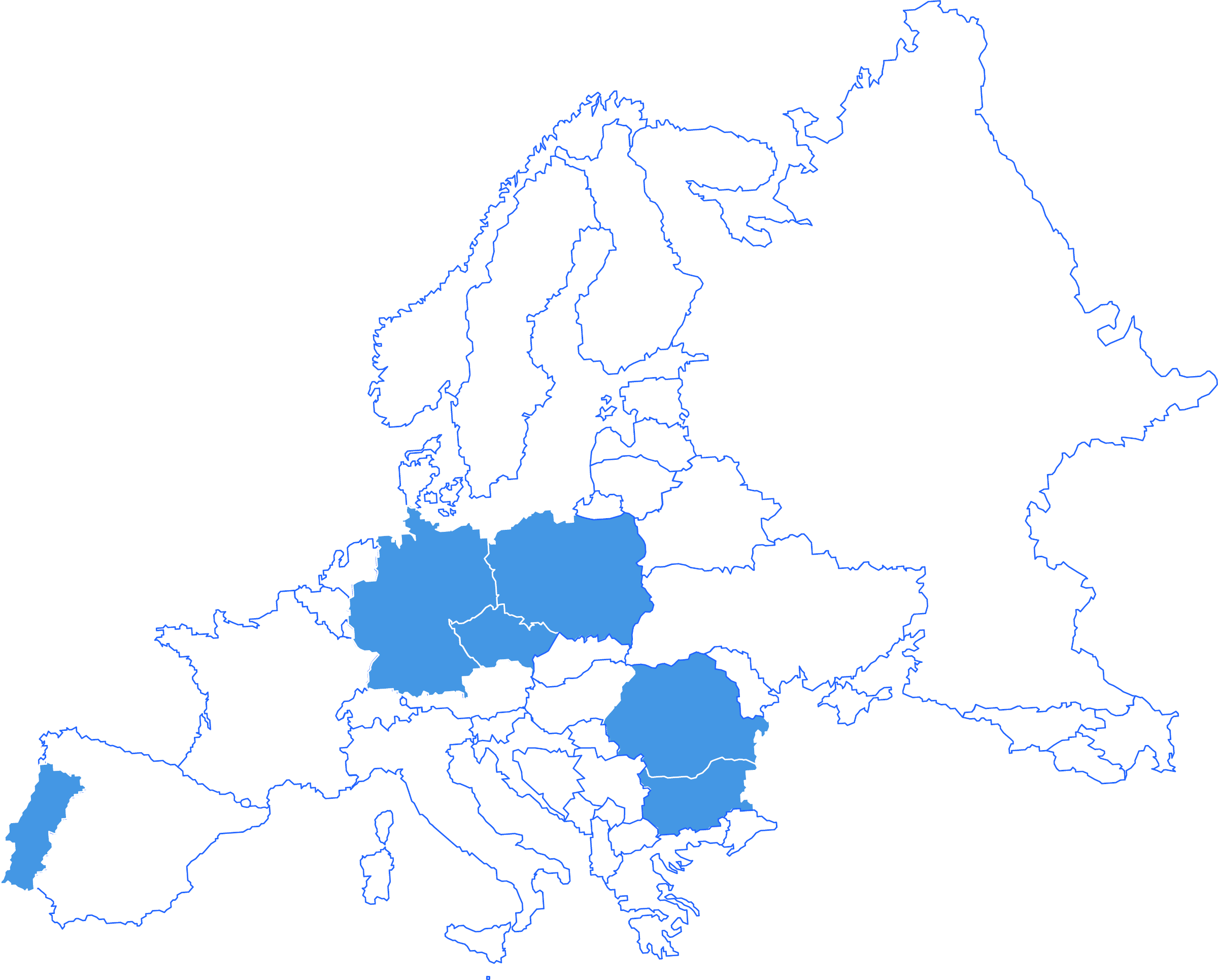
- Poland
- Czech Republic
- Romania
- Bulgaria
- Germany
- Portugal
- Greece
- Serbia
- Mexico
- Abu Dhabi
- Spain
What we stand for
Professionalism
Our team is dedicated to cost-effective solutions that meet your needs and provide value.
Integrity
We work with integrity in every sense – honest delivery, consistent standards, and one joined-up process end to end.
Quality
Our execution quality sets the standard. It shows our commitment to excellence and ensures reliable results.
Latest insights
Reduce friction
A design-build contractor is one team responsible for both design and construction under one contract. Instead of managing separate designers and builders, you work with one accountable partner who coordinates scope, timeline, and delivery from early planning through handover.
In design-build, one team manages both design and construction as a single service. A general contractor typically builds based on a design prepared by others. Design-build reduces handoffs, speeds up decisions, and helps keep scope and delivery aligned under one accountable partner.
EPC stands for Engineering, Procurement, and Construction. An EPC contractor delivers engineering and coordinates procurement and construction to complete a project as one package. For clients, it usually means fewer interfaces and clearer accountability for delivering a finished facility.
What qualificatiDesign and build can simplify responsibility and improve coordination. With one team, decisions are faster, reporting is clearer, and the design is developed with execution in mind. This often helps keep timelines and budgets more predictable and reduces friction between design and construction. ons does this certificate demonstrate
Warehouse cost depends on size, location, ground conditions, specification level, and fit-out needs (e.g., office space, loading, MEP). The fastest way to get a realistic range is to define scope and key constraints early, then build an initial baseline that can be refined as design progresses.
Cost per m² varies with structure type, height, slab requirements, fire protection, utilities, loading solutions, and site infrastructure. Location and ground conditions also matter. A like-for-like comparison needs the same specification and scope – otherwise “per m²” numbers can be misleading.
Concrete costs shift based on structural scheme, spans, slab performance requirements, foundation needs, and ground conditions. Programme constraints and access can also influence cost. The most reliable approach is to define functional requirements first, then select solutions that balance performance and budget.
The total cost depends on what is included: land works, utilities, roads, offices, fit-out, and approvals – plus the warehouse shell. To avoid surprise gaps, clarify what sits inside the project scope and what sits outside, then build one baseline estimate around that scope.
Choose a contractor based on relevant project experience, clear ownership, and the ability to manage schedule and communication. Look for transparent reporting, realistic planning, and a process that reduces handoffs. Ask how they control changes, coordinate stakeholders, and keep progress visible.
Start with proven project examples similar to yours and check how the contractor communicates and reports. Reliability shows in clear planning, consistent updates, and ownership of next steps. A reliable partner will ask the right questions early and make risks and assumptions visible.
Ask: Who owns day-to-day delivery? How will reporting work? What is the schedule plan and decision process? How do you manage changes? How do you coordinate subcontractors? What do you need from us to start? The answers should be clear, structured, and practical.
Your question is not here?
Contact us